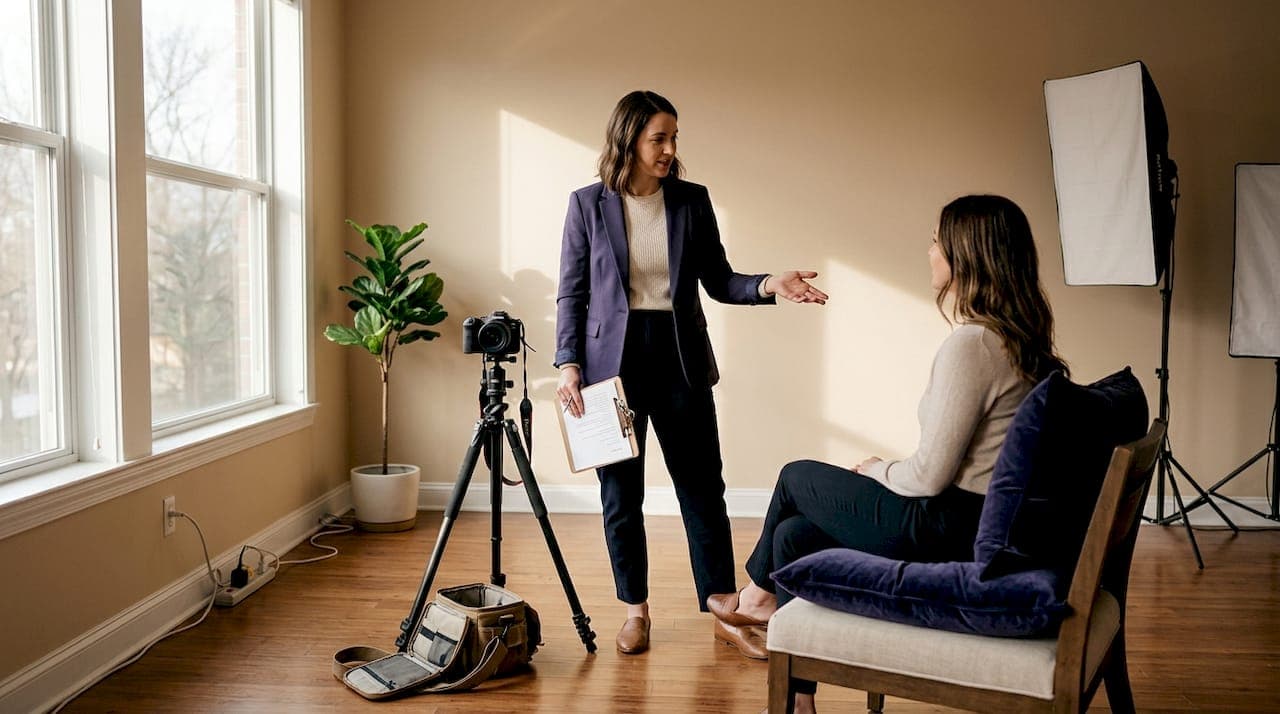
Most people who want a professional portrait session have the same quiet fear: they'll freeze in front of the camera and end up with photos that look stiff, forced, or nothing like themselves. The solution isn't a more relaxed attitude. It's the right photographer. Working with a direct photographer for editorial portrait sessions means you're not left to figure out your own angles. You're guided through a story. The industry term for this approach is directed editorial portrait photography, and when it's done well, the results feel both intentional and completely real.
Table of Contents
- Key takeaways
- What a direct photographer does in editorial portrait sessions
- How to prepare before hiring a direct photographer
- What to expect during your editorial portrait session
- Common mistakes to avoid with a direct photographer
- What happens after the session
- Why direction is the difference, not the decoration
- See Amanda Peralta's editorial portrait work
- FAQ
Key takeaways
| Point | Details |
|---|---|
| Direction creates authenticity | Subtle guidance from a skilled photographer produces more natural expressions than posing alone ever will. |
| Preparation shapes the story | Mood boards, wardrobe choices, and a clear "why" keep the session focused and prevent narrative drift. |
| Session length matters | Most editorial portrait sessions run 1.5 to 3 hours to allow for multiple setups and genuine pacing. |
| Communication prevents mistakes | Briefing your photographer on usage, vision, and logistics before the shoot saves time and protects the final result. |
| Post-session curation completes the story | Final gallery selection should reflect the agreed mood and narrative, not just the technically strongest frames. |
What a direct photographer does in editorial portrait sessions
The phrase "editorial portrait photographer" gets used loosely, but the defining quality is this: the photographer is an active collaborator, not just someone pressing a shutter. A story-first approach means the session is built around a cohesive mood, and every decision from location to light to your expression serves that story.
Here's what that looks like in practice during a professional portrait session:
- Subtle posture guidance. Rather than telling you to "smile more," a direct photographer adjusts the angle of your shoulders, the tilt of your chin, or the weight on your feet. These micro-movements change how you carry yourself without making you feel posed.
- Expression coaching. You'll be guided toward a feeling, not a face. A photographer might ask you to think of a specific memory or look slightly past the lens. The result reads as genuine because it is.
- Pacing the session. Good direction includes knowing when to shoot fast and when to slow down. Emotional presence builds over time, and a skilled photographer reads that rhythm.
- Pre-session vision alignment. Before the camera comes out, the best photographers spend time understanding your story. Mood boards, reference images, and a conversation about your goals are all part of this phase.
- Making you feel like yourself. The subject's comfort is treated as a technical variable, not an afterthought. Direction reduces the awkwardness that most people feel on camera.
Pro Tip: Ask any photographer you're considering one specific question: "How do you direct clients to get natural expressions?" Their answer will tell you immediately whether they rely on posing formulas or genuine connection.
How to prepare before hiring a direct photographer
Preparation is where most editorial portrait sessions succeed or fall apart before they even begin. The good news is that your preparation doesn't need to be complicated. It needs to be clear.
Start with your "why." Before you contact a single photographer, write down what these photos are for. Are they for a magazine feature, a personal brand website, a book cover, or a speaking profile? The purpose shapes every other decision. A portrait for a law firm's website carries a different emotional weight than one for a creative portfolio.
Build a mood board. Collect 10 to 15 images that reflect the feeling you want, not necessarily the exact style. Include images you don't want too. Mood boards and reference images clarify your desired look and prevent the kind of miscommunication that wastes session time. Tools like Pinterest work fine for this.
Here's a preparation checklist to work through before your first photographer conversation:
- Define the primary use of your photos (print, digital, social, editorial publication).
- Gather 10 to 15 mood board references, including what you want to avoid.
- Choose two to three wardrobe options that align with your story's tone.
- Research locations that match your visual concept and check permit requirements.
- Identify whether you need a stylist or makeup artist and book them early.
- Write down your session goals in two or three sentences so you can share them clearly.
| Preparation element | Why it matters |
|---|---|
| Defined purpose | Keeps wardrobe, location, and tone aligned to one story |
| Mood board | Reduces miscommunication and saves session time |
| Wardrobe options | Allows variety without losing narrative consistency |
| Location research | Protects emotional pacing by eliminating day-of surprises |
| Supporting team | Stylist and makeup artist free you to focus on presence |
Pro Tip: Write a one-paragraph "visual thesis" for your session. Something like: "I want to look approachable and confident, in a natural outdoor setting, for a wellness brand audience." A clear visual thesis keeps wardrobe and location choices from pulling the story in conflicting directions.
What to expect during your editorial portrait session
Knowing what's coming makes it easier to stay present. Here's the honest breakdown of how a directed editorial session actually unfolds.
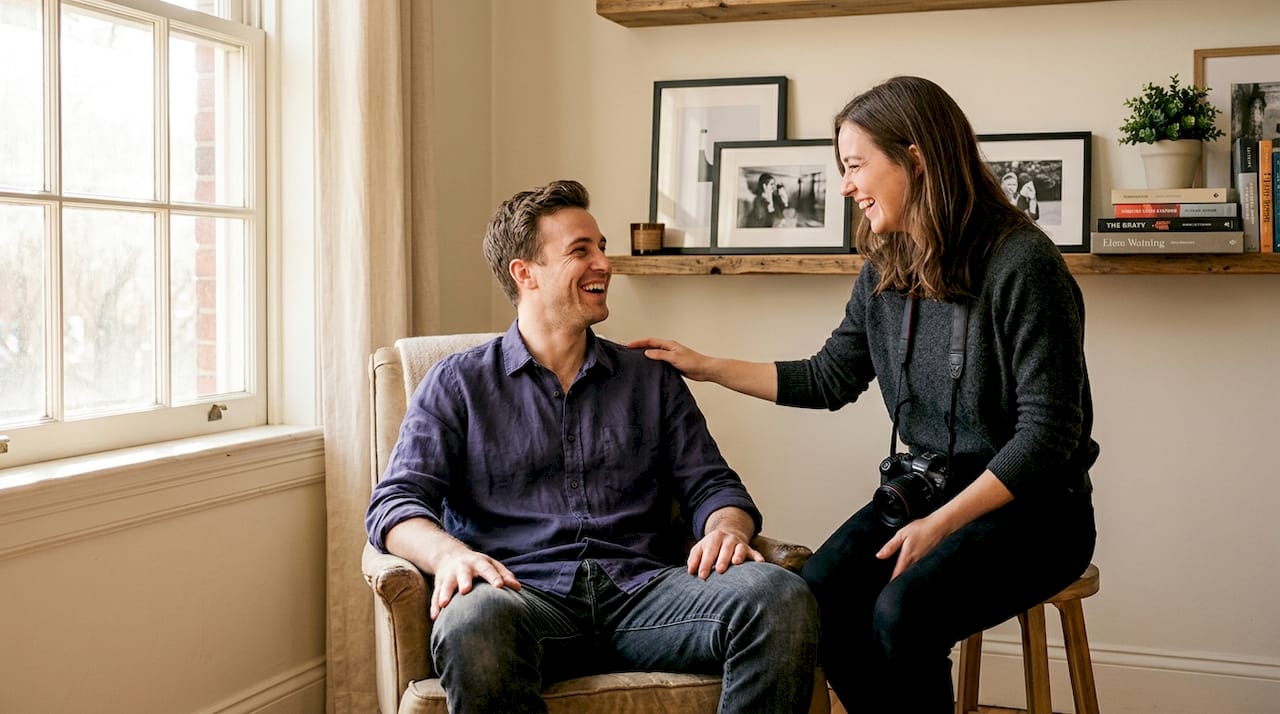
The warm-up phase. The first 20 to 30 minutes are rarely the best photos. This is normal. A good photographer knows this and uses early shots to help you relax into the space. Don't judge your comfort level by the first few frames.
Active direction throughout. You won't be left standing in front of a wall wondering what to do with your hands. Direction is continuous and conversational. Micro-movements and real-time review help adjust expressions without creating stiffness. Some photographers will show you a frame on their camera screen mid-session, not to critique you, but to help you see what's working.
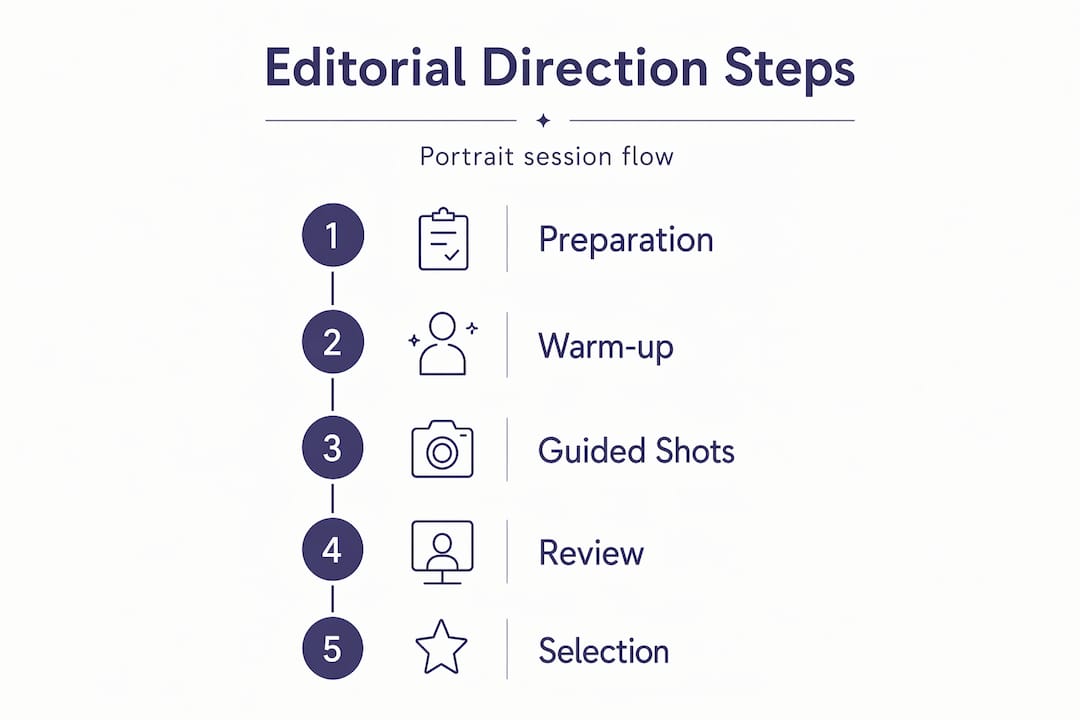
Here's what a typical session structure looks like:
- Opening setup: First location or wardrobe, warm-up shots, establishing the tone.
- Mid-session: Peak energy and focus. This is where the strongest editorial frames usually happen.
- Transition: Wardrobe or location change, brief reset, second narrative thread begins.
- Closing: Looser, more relaxed shots. Often produces surprisingly honest images.
Sessions typically run 1.5 to 3 hours depending on how many wardrobe changes and locations are involved. Rushing this timeline is one of the most common mistakes clients make.
| Session phase | Approximate time | Focus |
|---|---|---|
| Warm-up | 20 to 30 minutes | Building comfort and establishing tone |
| Primary shooting | 45 to 60 minutes | Core editorial narrative frames |
| Transition | 10 to 15 minutes | Wardrobe or location change |
| Secondary shooting | 30 to 45 minutes | Second story thread, looser frames |
Pro Tip: Eat something before your session and give yourself buffer time before the start. Arriving rushed or hungry affects your emotional presence more than any wardrobe choice.
Common mistakes to avoid with a direct photographer
Even with the best photographer, a few predictable mistakes can undermine the session. Knowing them in advance puts you ahead.
Skipping the pre-shoot conversation. Some clients send a mood board and assume the photographer will fill in the rest. Strong pre-shoot alignment among everyone involved sharpens storytelling coherence. A 20-minute call before the shoot is worth more than an hour of correction after.
Underestimating wardrobe time. Outfit changes take longer than people expect. If your session includes two or three looks, factor in 10 to 15 minutes per change, plus time to adjust hair and makeup. Build this into your schedule before you arrive.
Choosing a photographer without reviewing their direction style. A beautiful portfolio of landscape photography tells you nothing about how someone directs people. Look specifically for portraits where the subjects look natural and present, not just technically well-lit. Ask to see behind-the-scenes footage or client testimonials that speak to the experience, not just the outcome.
Ignoring location logistics. Scouting locations for lighting at different times of day and securing any required permissions protects the emotional pace of your shoot. Arriving at a location only to discover it's closed or overcrowded breaks the narrative flow and costs you time you can't recover.
"Photographers who document real moments serve a vital role distinct from AI-generated images by being trusted witnesses to events. Honest images carry weight that manufactured ones simply cannot."
What happens after the session
The shoot ends, but the story isn't finished. Post-session work is where a skilled editorial portrait photographer separates their best frames from the rest.
Here's what the post-session process typically looks like:
- Initial culling. The photographer reviews all frames and removes technically weak shots, duplicates, and anything that breaks the narrative.
- Curated gallery delivery. You'll receive a gallery matched to the mood and story you planned together, not just a dump of every frame taken.
- Client review window. Most photographers offer a selection period where you can flag favorites or request alternatives from the session.
- Final editing and delivery. Selected images are color-graded and retouched to match the editorial style established in pre-shoot planning.
- Usage and distribution. Once delivered, you can deploy your portraits across the platforms you identified in your brief, whether that's print, social media, or a website.
What separates editorial portraits from standard headshots in the final gallery is narrative coherence. Each image should feel like it belongs to the same story. If you look at your gallery and the photos feel like they could belong to three different people, something broke down in the direction or the preparation. That's a conversation worth having with your photographer before you accept the final delivery.
Why direction is the difference, not the decoration
I've worked with people who came to sessions convinced they were "bad at being photographed." What I've found, every time, is that the problem was never them. It was the absence of direction.
Direction in editorial portrait work isn't about control. It's about removing the guesswork so the person in front of the lens can stop thinking and start feeling. When I guide someone through a small shift in posture or ask them to look toward a specific point of light, I'm not manufacturing a pose. I'm creating the conditions for something real to surface.
What I've learned from years of this work is that authenticity requires guided subtlety, not just candid moments. Candid photography captures what happens. Directed editorial photography captures what's true. Those aren't always the same thing.
The clients who get the strongest results are the ones who trust the process and communicate openly before the session starts. They show up having done the preparation work. They're not trying to perform. They're just present. My job is to witness that presence and frame it well.
— Amanda
See Amanda Peralta's editorial portrait work
If you've been looking for the best photographer for portraits that feel genuinely yours, not curated for someone else's idea of who you are, the work starts with a conversation. Amandaperalta brings a fine arts background and a veteran's disciplined presence to every session, creating narrative-driven portraits that reflect real people in real moments. Every session is built around your story, guided with intention, and delivered as a gallery that holds together as a whole. Reach out to discuss your vision, your purpose, and what you want your portraits to say about you.
FAQ
What does a direct photographer do differently in a portrait session?
A direct photographer guides your posture, expression, and movement throughout the session rather than leaving you to pose on your own. This approach produces more natural, story-driven results than unguided photography.
How long does a professional portrait session typically take?
Most editorial portrait sessions run between 1.5 and 3 hours, depending on the number of wardrobe changes and locations involved. Rushing this timeline reduces the quality of direction and emotional presence in the final images.
How do I hire an editorial photographer who specializes in direction?
Review portfolios specifically for portraits where subjects look natural and present, not just technically lit. Ask directly how the photographer guides clients during a session, and look for testimonials that describe the experience, not just the final photos.
What should I bring to a professional portrait session?
Bring two to three wardrobe options aligned with your visual concept, your mood board references, and a written summary of your session goals. Arriving prepared lets you focus on presence instead of logistics during the shoot.
How is photography for editorial articles different from standard headshots?
Editorial portraits are built around a narrative and a mood, with each image contributing to a cohesive story. Standard headshots prioritize a single, technically strong frame without the storytelling context that makes editorial work distinctive.